

Measuring range
Linearity verification
Run linearity materials in replicate to check the response across your measuring range. LabRuns fits a straight line and checks each level's deviation against your limit. With independently assigned concentrations, it also checks accuracy and whether the lowest and highest levels reach the ends of your claimed reportable range.
Your first week is free, with no card needed. See pricing.
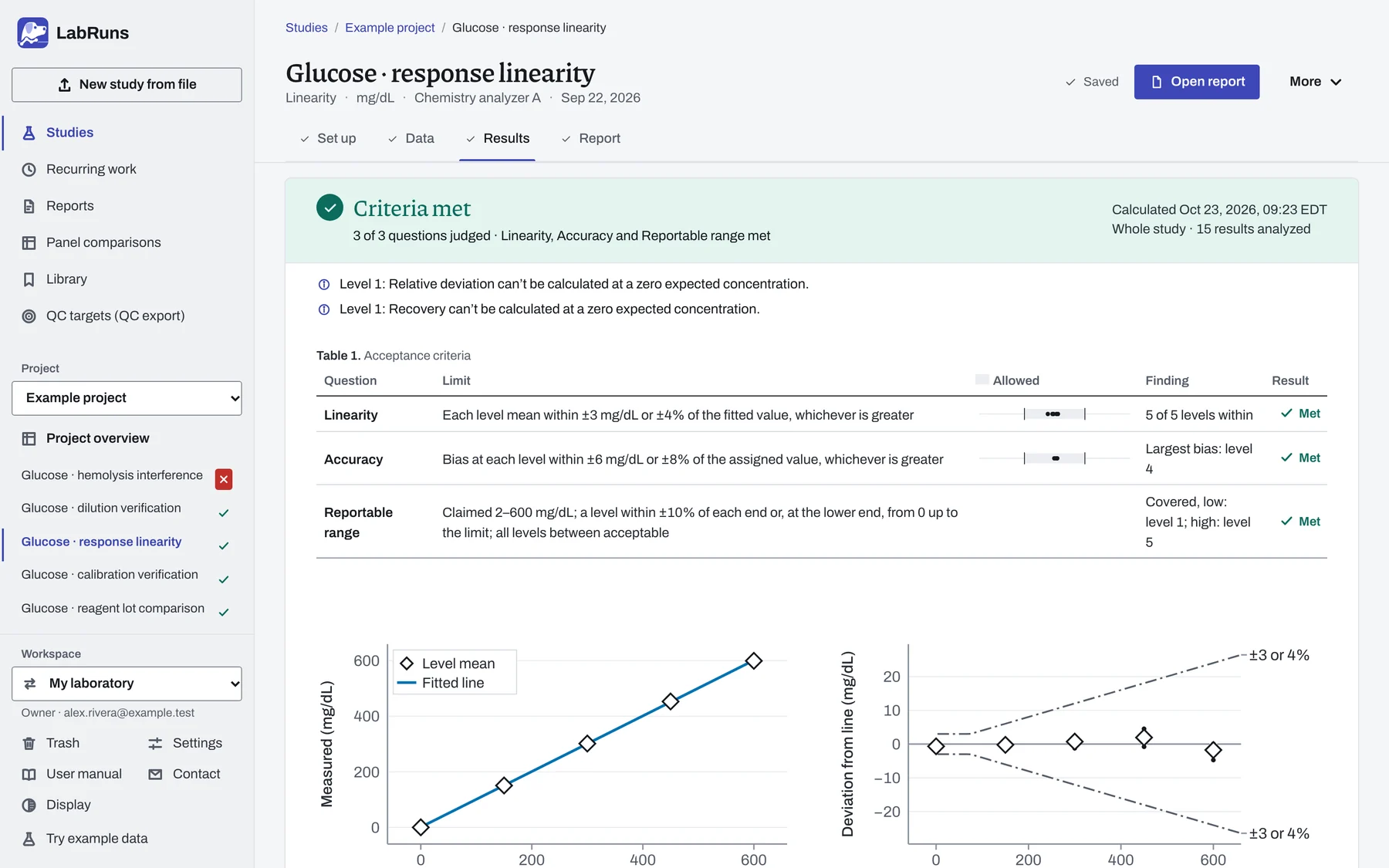
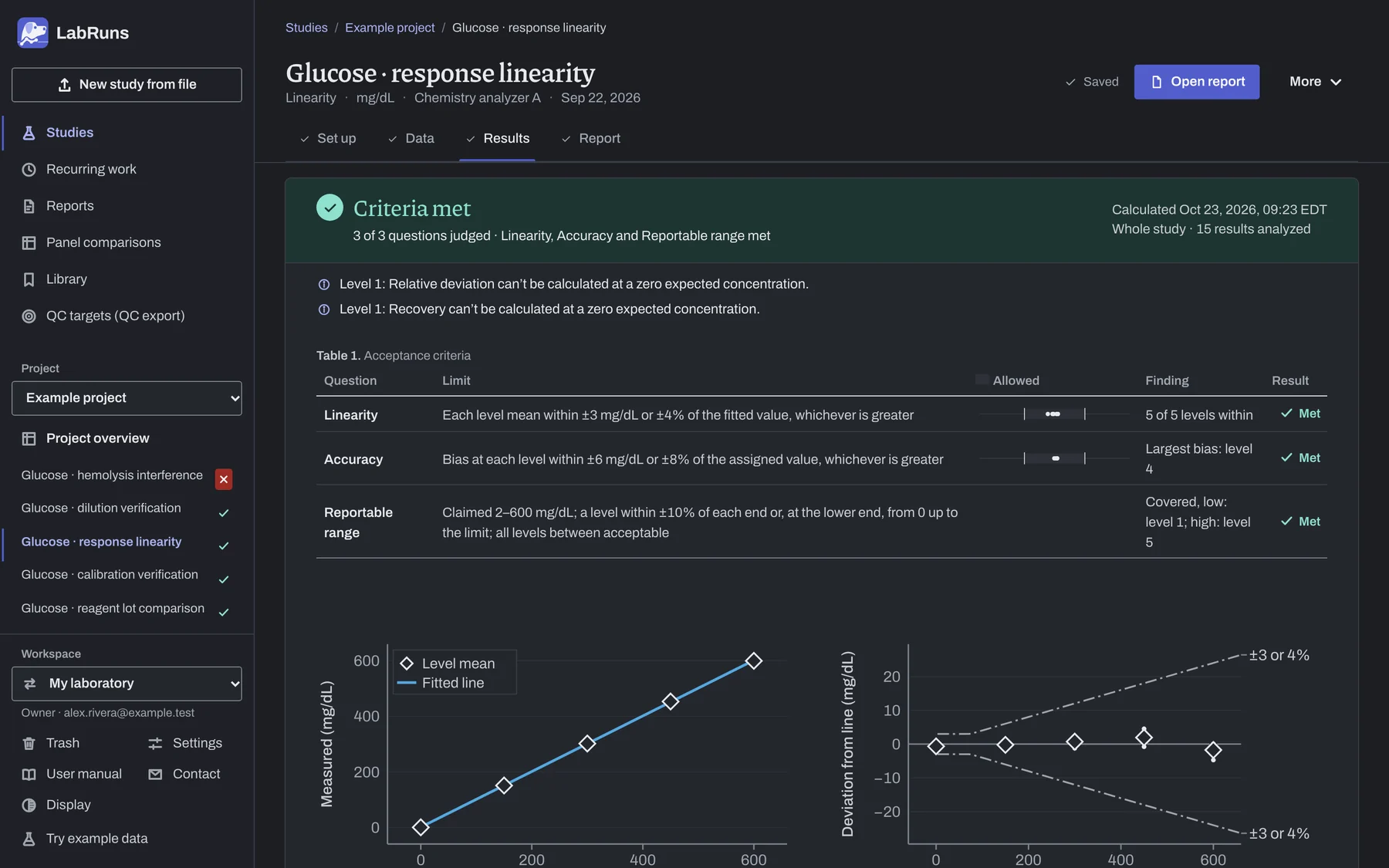
Every limit and its result on one screen.
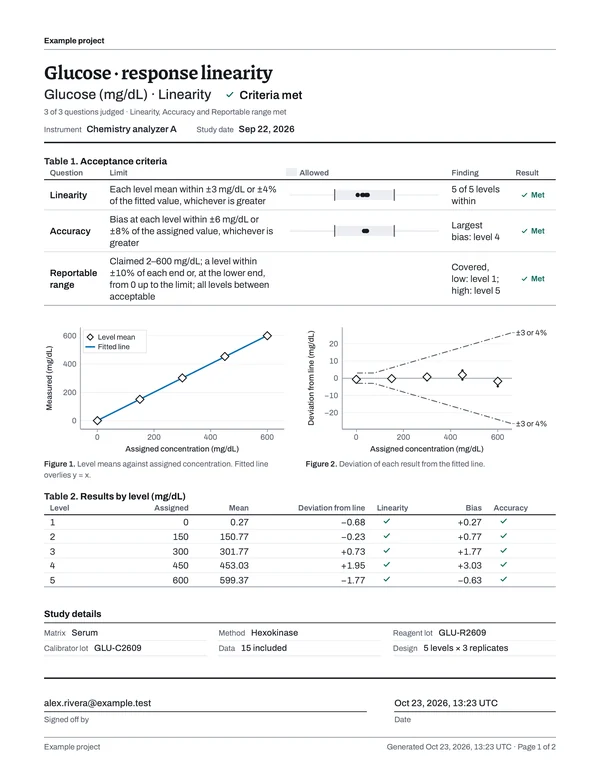
LabRuns compares each level's deviation from the fitted line with your limit. Review the response and deviation plots for curvature.
Collection plan
- A series of known concentrations from suitable commercial materials or a documented admixture series.
- Levels at the intended low and high ends, with the others spread between them.
- A record of how each expected concentration was assigned.
Suggested starting design: 5 concentrations × 3 measurements each; 15 results.
Add levels around clinical decision concentrations or suspected curvature. This plan follows the example in Xiao and Chambliss's 2023 review of reportable range verification.
Acceptance limits
Enter how far a level may sit from the fitted line. To judge agreement with the assigned concentrations as well, add bias or recovery limits, and add a total-error allowance if you want every replicate checked on its own.
To verify a reportable range, enter its lower and upper limits and how close the end levels must come to them. An equal-step series with Calculate theoretical values is enough for the straight-line check, and the accuracy checks need independently assigned values.
Report
Page 1 shows the response and deviation plots with your limits and results, and gives Linearity, Accuracy and Reportable range their own outcomes, so you can see at once which part needs attention. Later pages hold the level statistics, each replicate's outcome and the data you entered.
Records
Each saved calculation keeps the data and limits it used. History lists every saved calculation and signed report, each with its own PDF. Prepare an evidence binder with the report versions you choose, grouped by analyte or analyzer, and download the combined PDF and supporting archive.
Keep the material lot, how it was prepared and where the assigned concentrations came from. When the next verification comes due, Recurring work starts it from a copy of this study's setup and limits.
Guides
Read the bench guide before you collect, or follow an example study from setup to its signed report.
Run your next linearity verification.
Start from the suggested collection plan, bring in your analyzer results and sign the report once your laboratory has made its decision.